Winds are an important phenomenon on the Earth both in terrestrial areas as well as in the gaseous envelop (atmosphere) around the Earth. Occurrence of winds and their patterns are caused by the Earth’s own rotation and uneven heating of the Earth by the Sun. Pressure and temperature differences in the atmosphere are primary conditions leading to generation of winds. Anthropogenic activities also cause uneven heating of the Earth as well as lower atmosphere and contribute as unnatural factor in influencing the natural wind pattern. Wind types are classified into several categories depending on their geographical location, direction, time period, seasonality and regional conditions. For example, planetary or primary winds, monsoon winds, westerlies, trade winds, local winds, mountain breeze, valley breeze, land breeze, sea breeze etc. Extreme weather events like storms, hurricanes and cyclones etc are also associated with winds.
Winds possess magnitude, force and direction and thus are important factors that apart from directly affecting the living and non-living components, also affect other environmental characteristics and pattern. Winds transport moisture, heat, particulates, gases etc from one place to another. Even dispersal of many pollutants from their source to other areas is also caused by winds. Different ecosystem conditions undergo daily changes in wind direction and speed. We can explicitly see the diurnal change in wind pattern in coastal areas, valley areas, desert area, high mountain areas etc.
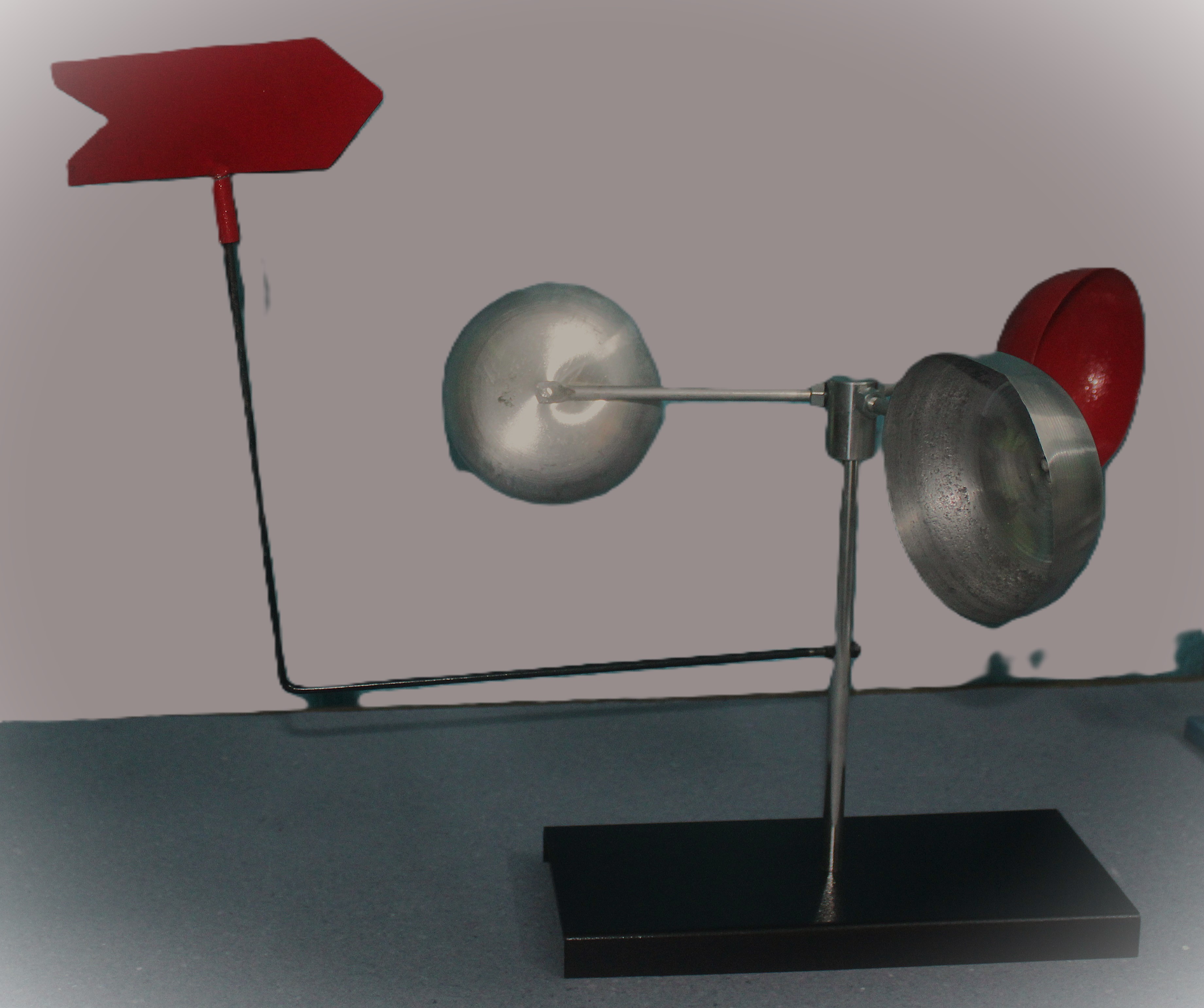
Wind Vane is a useful tool to record the direction of wind. It consists of an arrow-shaped structure called the ‘vane’ which is fixed on a pivot. The vane has two ends, one of which is arrow form and points in the direction of wind while the other end which is wider, catches the air. A record of wind flow direction each day can be maintained using the wind vane.
To measure the wind velocity Cup Anemometer is the simplest device that consists of hemispherical cups on horizontal arms mounted on a vertical shaft. The air flow in any horizontal direction turns the cups and causes the shaft to rotate. Under absence of other factors influencing the shaft’s rotation the rotation speed of anemometer is proportional to the speed of wind. By counting the rotations over a period of time one can calculate the wind speed in distance per hour (e.g. kilometer per hour) unit.
Wind direction and speed recorded over a period of time can be depicted in the form of a diagram called windrose. The study of wind direction and wind speed of an area helps in scientific research, monitoring, predictions and planning, development of urban areas and industries, management of agriculture and other natural resources etc.

