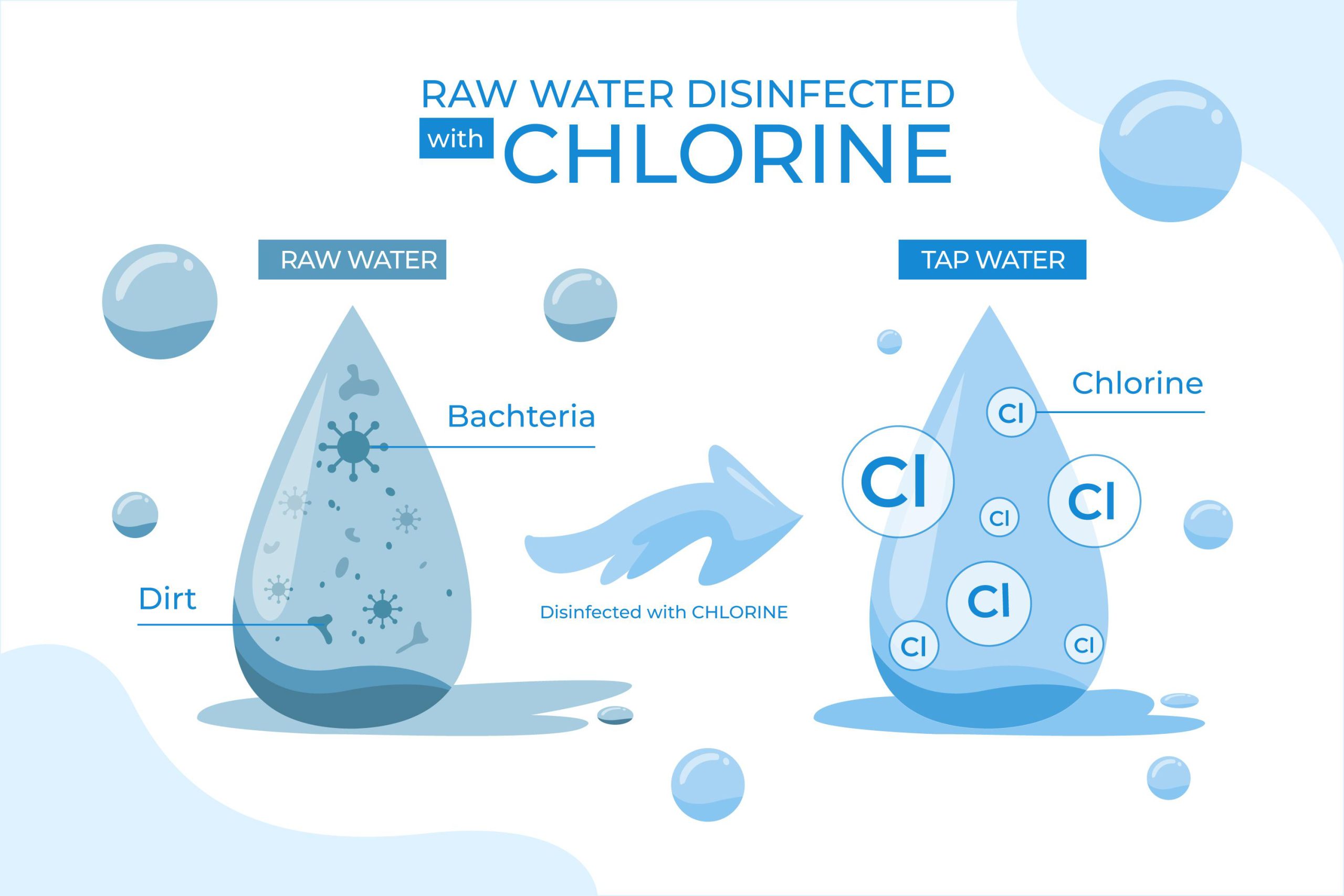
Chlorine in water can be present in
two forms namely available chlorine which is naturally present in the water
and residual chlorine
which is extra and tends to be added externally. Externally additive chlorine
comes in several forms like granules, tablets, powder, liquid and gas. It
dissolves easily in water. When chlorine is added to water, it will attack
organic matter and attempt to destroy it. If enough chlorine is added, some
will remain in the water after all possible organisms have been destroyed and
what is left is called residual chlorine. It does not remove chemical
contaminants from the water.
Although
chlorine does not destroy all micro-organisms but it is effective against a wide
variety of disease causing microorganisms. It kills most of the microbial
agents at the treatment point and its residual can further protect the water
through long delivery pipeline to give the chemical time to perform its
disinfecting action before it reaches the consumer. The presence of Residual Chlorine
in drinking water indicates that most of the microbial organisms have been
killed and the water will remain protected from recontamination during
storage until the residual chlorine dissipates itself or is dissipated by
heating of water. For domestic use the amount of residual chlorine at the point
where the consumer collects water should be between 0.2 to 0.5
milligram per litre.
There are
different methods of estimation of residual chlorine. The simplest and quickest
method is detecting its concentration in water by adding DPD (diethyl
paraphenylene diamine) indicator and comparing the colour change in water using
a color comparator.Â

